
The World’s First!
The world’s first automatically height-controlling extra-lightweight concrete laser screed. It is easy to transport and can be used for pouring concrete in any environment. This innovative tool delivers perfectly smooth and even surface, ensuring the floor remains within ±1 mm. Easy to use, no special training needed. The device also reduces the physical strain on construction workers worldwide. The vibration force is directed in a way that makes it easier for the operator to pull the machine!

2 Models Available
“Vibration Laser Screed 1300”
Width: 1250mm
Vibration power: 750N
Weight: 14kg + battery
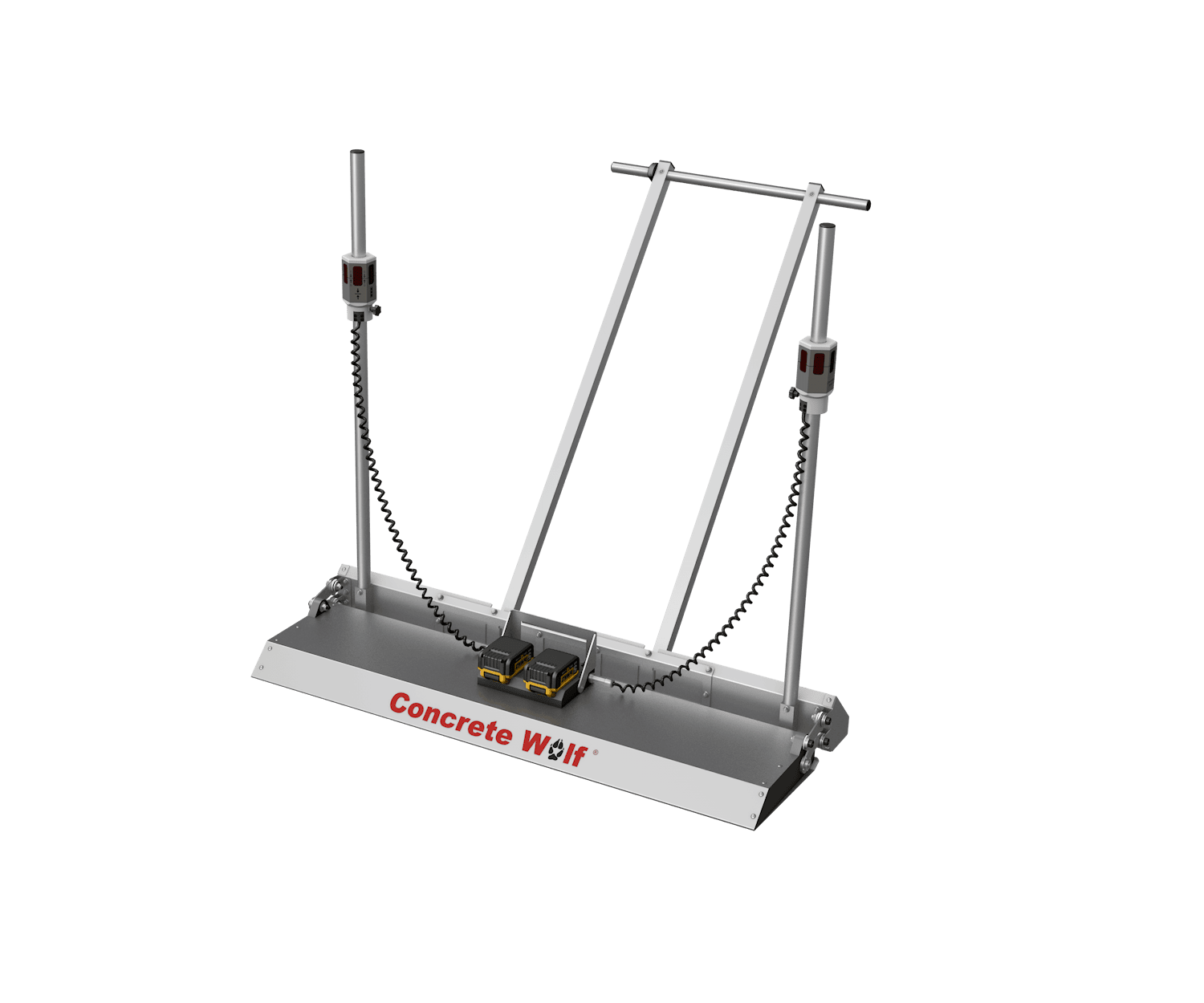
“Vibration Laser Screed 1800”
Width: 1750mm
Vibration power: 2 X 750N = 1500N
Weight: 19kg + battery
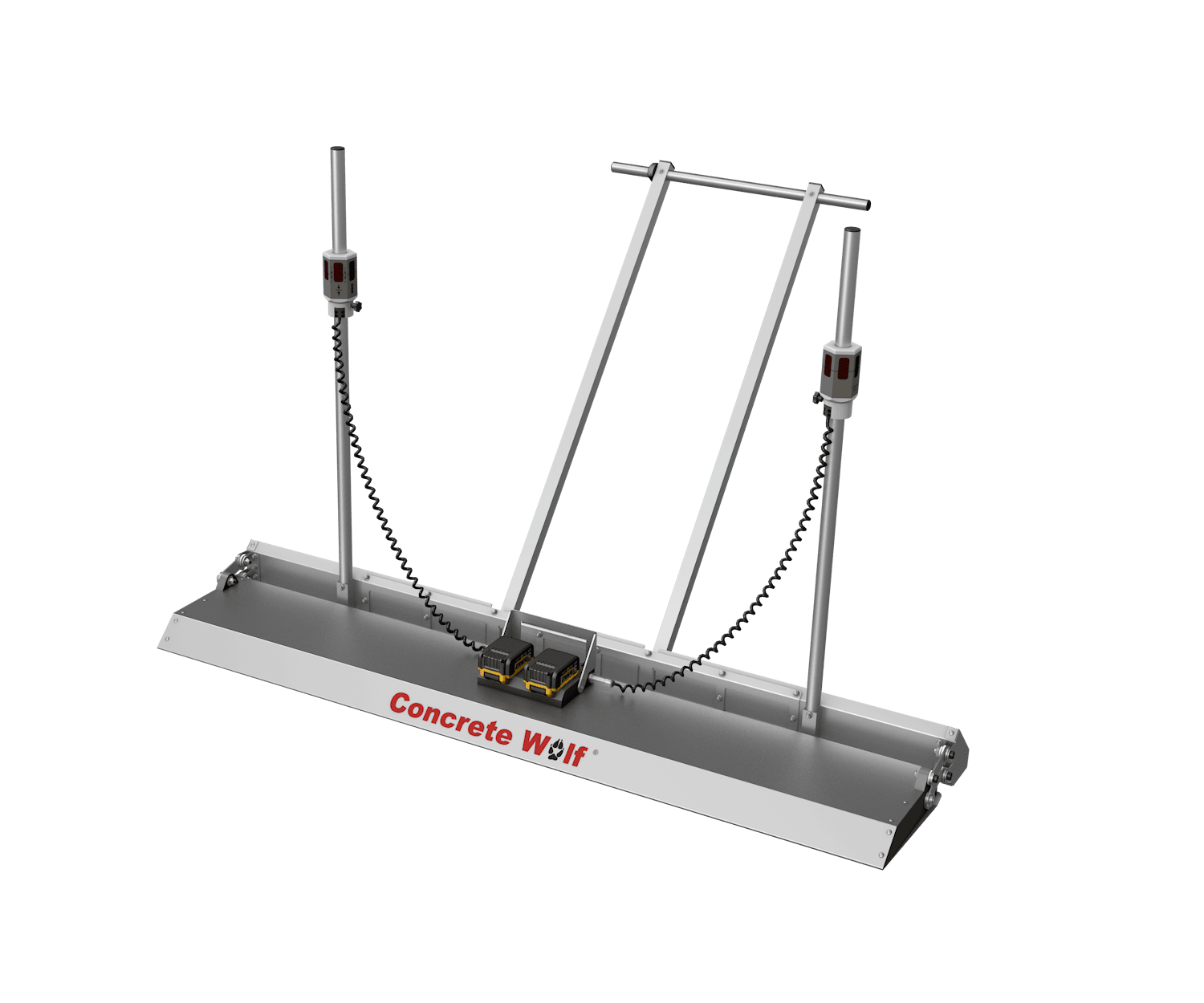
Battery adaptor according to your choice:
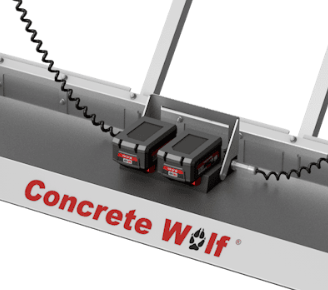
Milwaukee
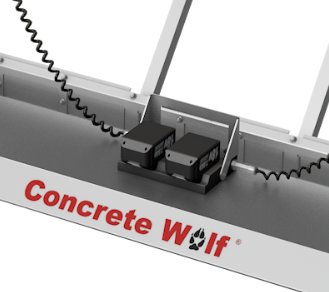
Makita
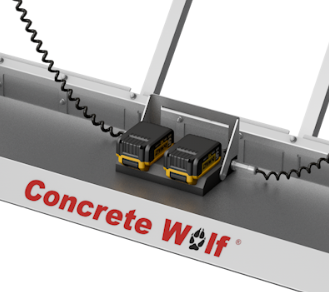
Dewalt
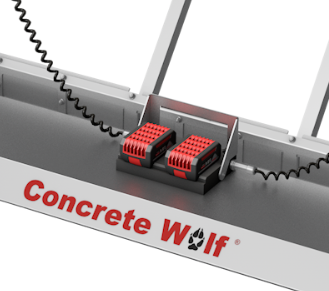
Bosch
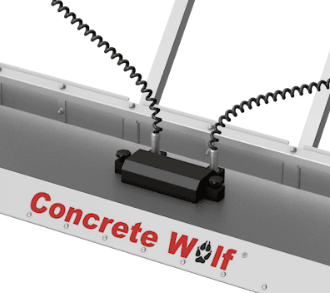
LiFePO₄
Supports 2 batteries, but works with 1 battery, too!
Adaptors for Metabo and Hilti are also available!
New! Works with 18V Tool Batteries
– The previous version of the Vibration Laser Screed that works with LiFePO₄ batteries is still available, but we recommend the new model.
– Batteries and charger are not included.
Please let us know which battery brand you prefer so we can install the correct adaptor.
We recommend using higher‑capacity batteries, such as 12Ah. Smaller ones can also be used, but they will need to be replaced/charged more frequently.

Milwaukee
M18 HB12

Makita
1915J2-8

Dewalt
DCB548-XJ

Bosch
1600A016GU
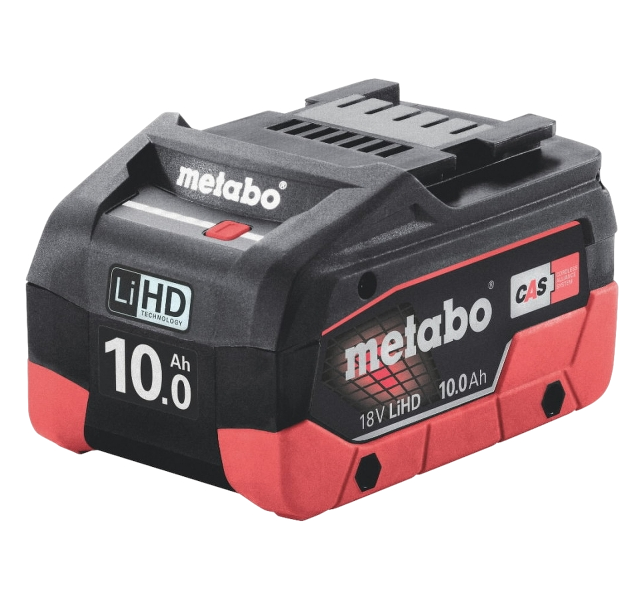
Metabo
624991000
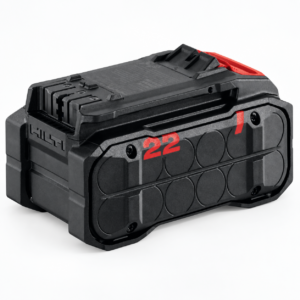
Hilti (22V)
B 22-290 NURON

LiFePO₄
We recommend more powerful ones, for example:
Milwaukee: the most powerful multi‑port 18V charger is the M18™ Dual Bay Super Charger (M18DBSC). It provides Super‑Charger‑level output on two bays simultaneously, dramatically reducing charge times for all M18 batteries, including HIGH OUTPUT packs.
Makita: the most powerful and fastest 18V dual‑port charger is the DC18RD, a Rapid Optimum Charger that can charge two 18V 5.0Ah batteries simultaneously in about 45 minutes while actively cooling the batteries during charging.
DeWalt: the most capable multi‑port 18V charger is the DCB132 Dual‑Port Charger, supporting both 18V XR and 54V FlexVolt batteries. It charges two packs at the same time and maintains high output even with mixed battery types.
Bosh: the GAL 18V2‑320 is a high‑performance 18V dual‑bay charger designed for professionals who need fast, reliable charging for multiple Bosch 18V batteries.
Metabo: the ASC 145 DUO is a dual‑port quick charger for all Metabo 12–36 V Li‑ion and LiHD batteries, featuring AIR COOLED technology for fast, efficient, and simultaneous charging.
Hilti: the C 8D/DC‑22 Nuron Dual‑Bay Flash Charger is a high‑speed two‑slot charger engineered for demanding jobsite use, ensuring rapid, reliable charging of any Hilti Nuron 22V battery.

Milwaukee
M18DBSC

Makita
DC18RD

Dewalt
DCB132

Bosch
GAL 18V2‑320
Vibration Laser Screed
Suitable for S2/S3/S4 concrete. Our concrete leveling machine allows you to level concrete with ultimate precision. We use rotary laser and vibration technology developed over the course of 4 years to offer you the best solution possible. Weighing only 14kg, this device can be transported with an ease and used in limited spaces with limited access. Vibration Laser Screed can be operated by any construction worker, no long term experience or qualifications needed.
Introduction
The principle of concrete leveling hasn’t changed over the years. Our equipment aims to modernize this process by making it less dependent on skilled labor while also making it more affordable and accessible.
The device works by plowing the concrete to the correct height, then using a vibration screed to smooth it flat.
The Vibration Laser Screed works with all rotating red beam lasers. We do not include a rotating red laser with the device to avoid unnecessary expenses. If desired, it is possible to purchase the Stabila rotation laser LAR160 or LAR350 through us, ensuring an accuracy of ±1 mm.
Our Vibration Laser Screed offers a modern alternative to traditional equipment that’s difficult to handle, expensive, and requires an experienced operator.
For a visual introduction, watch the animation!
- Affordable price
- Easy to use
- Weights only 14 kg
- Easy to transport to hard-to-reach places
How It Works
It’s a high‑tech product with complex electronics and software. It took years of development to make this possible and to create a device that is very easy for the operator to use.
When the operator pulls the device, the automation raises or lowers the screed blade to maintain the correct amount of concrete under the vibrating screed, ensuring the entire machine stays at the intended height. The machine first pulls the concrete to the correct height, then smooths and levels the surface using vibration technology.
The operator only needs to pull the device, while the vibration technology provides approximately 30% of additional pulling force. The height is automatically adjusted according to the rotary laser. For efficient operation, the machine is equipped with sensors that take into account ground gravity and changes in positions across different axes. Inside the vibrating screed there are servo motors and vibration motors, and the servomotors move the blade in the required direction.
Getting Started
It takes about 15 minutes to assemble. When assembling, follow the instructions!
- Charge the battery.
- Set-up rotating red laser level. Recommended height from concrete surface to be leveled is 30-60cm.
- Measure the height of the laser beam from the surface of the concrete that needs to be leveled.
- Move the “0” marks of the laser receiver to the height measured from the lower edge of the plow.
Specifications
Download full specifications »
Vibration Laser Screed
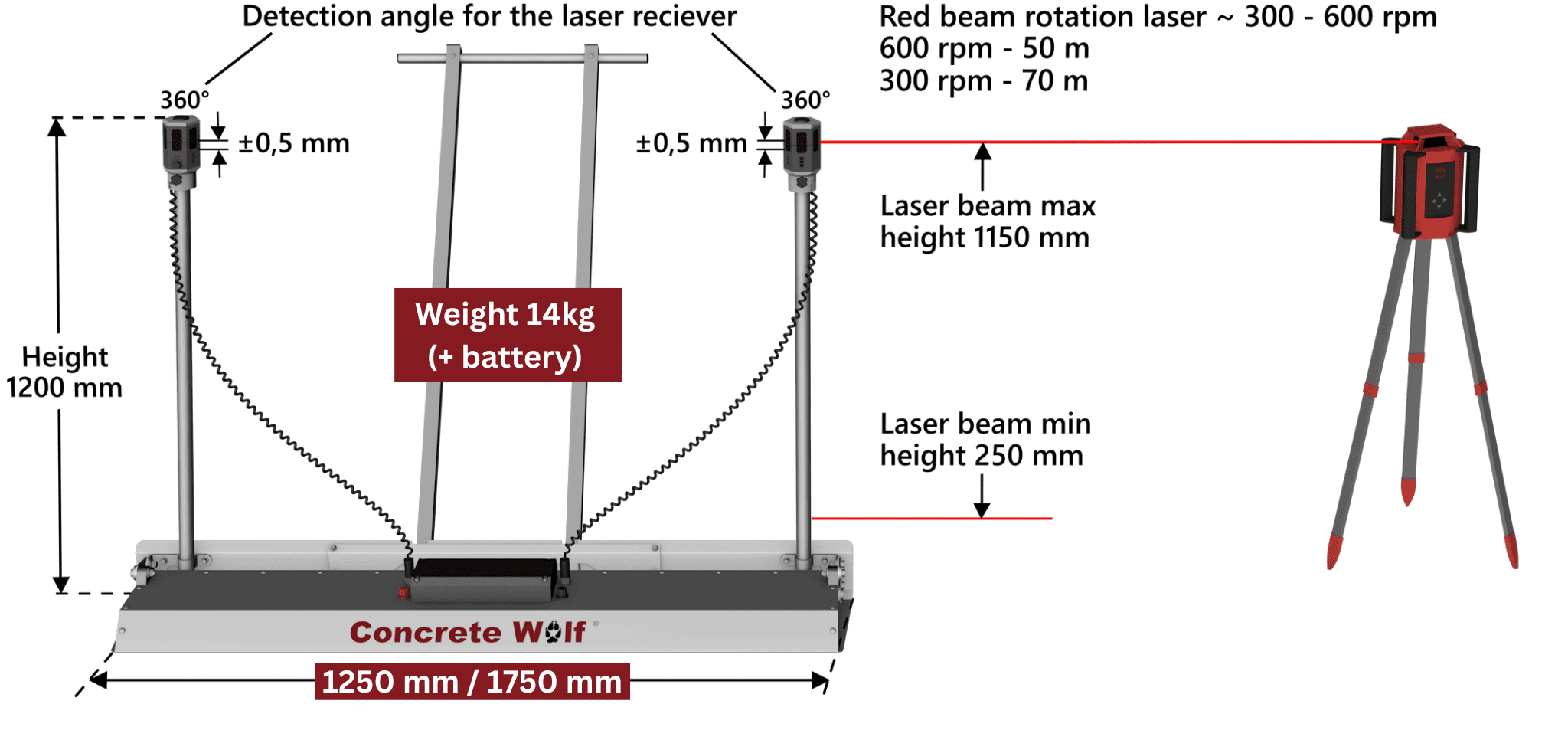
“1300”: width: 1250mm, weight: 14kg + battery
“1800”: width: 1750mm, weight: 19kg + battery
—
Operating voltage: 10-18 V
Accuracy: ±1 mm
Power consumption:
– “1300″ – 5A/h
– “1800” – 7.5A/h
Vibration power:
– “1300″ – 750N
– “1800” – 750N X 2 = 1500N
Level adjustment: 200Hz (200 times per sec)
Vibration adjustment:
– Vibration frequency: adjustable 15-47Hz (15-47 times per second)
Laser Receivers
Radius: 360°
Accuracy: ±0.5 mm
Reaction Speed: 100ms
Reception Distance:
– Rotation Laser 300 rpm: ≤ 70m
– Rotation Laser 600 rpm: ≤ 50m
(Recommended: 600 rpm)
Laser’s data processing: 250kHz
Package & Accessories
Screed device (model-specific: “1300”, “1800”)
Laser receiver X 2
Necessary accessories

Rotating red laser level (300-600rpm).
It is recommended to use 600rpm rotating laser level.
Additional Information
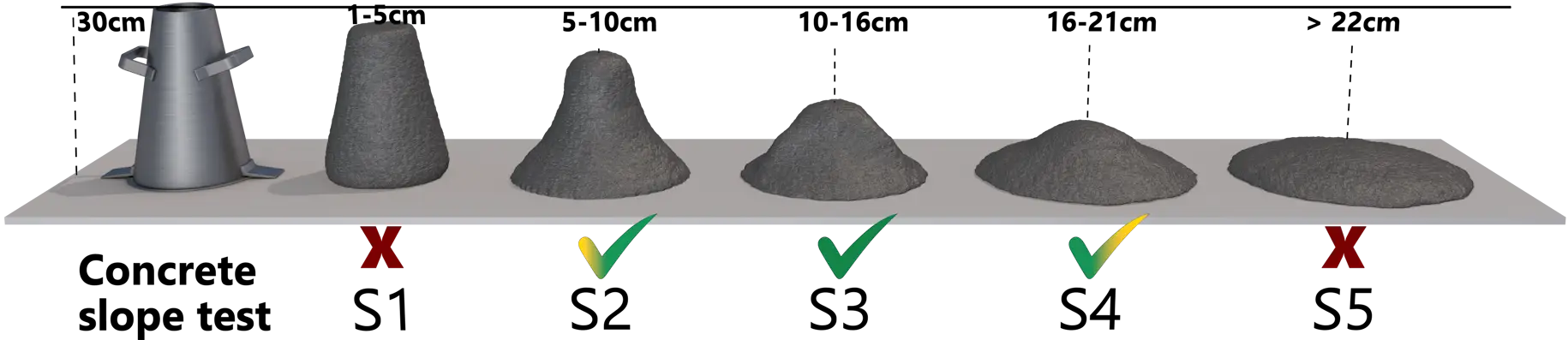
Concrete flow properties of concrete complying with the EN 12350-5 standard, which is characterized by five flow classes: S1, S2, S3, S4, S5.
It is recommended to use S3 flow class.
Classes S2 and S4 are also suitable for leveling.
It is not recommended to use the device for S1 concrete leveling.
The device is not suitable fot S5 concrete leveling.
Videos
Concrete floor pouring with the Concrete Wolf Vibration Laser Screed device
Vibration Laser Screed’s Presentation And Comparison With Big Machine
Pure real-life demo of Vibration Laser Screed without background music
Concrete Wolf Rotary Laser Screed Construction Site Demo
Concrete Wolf Construction Site Demo
Concrete Wolf Vibration Laser Screed Construction Site Demo
Sand Leveling with Vibration Laser Screed: Quick Demo
Concrete Wolf® Vibration Laser Screed – Concrete Leveling Machine presentation
Concrete Wolf Vibration Laser Screed Assembly
Prices
Frequently Asked Questions
Delivery contains: Vibration Laser Screed device and laser receivers.
What else is needed: batteries and charger are required. To operate the device, a rotary laser and a measuring tape are also required.
The machine contains servo motors inside the vibrating beam that raise or lower the screed blade automatically. Two rotary laser receivers (one on each end) continuously detect the laser beam and feed height data to the controller every time the laser beam passes over. The automation keeps the correct amount of concrete beneath the vibrating screed at all times. The machine first plows the concrete to the correct height, then vibrates and smooths it flat. The operator only needs to pull — no rails, no manual height control.
The vibration force is directed so that it reduces the operator’s pulling effort by approximately 20-30%. This makes pulling significantly easier.
The 1300 model is 1250 mm wide; the 1800 model is 1750 mm wide. The 1300 has one vibration motor; the 1800 has two vibration motors for consistent vibration efficiency across the wider beam. The 1800 is more stable and efficient in general and is recommended as the default choice. The 1300 is preferred only when working areas are too narrow for the 1800. Vibration power: 750 N (1300) and 1500 N (1800).
Approximately 6 feet (1800 mm) is the largest model available. Due to the technology used, there are physical limits to possible dimensions. Customer feedback has confirmed that a wider option is not needed — the machine adjusts its height precisely on its own.
The Vibration Laser Screed uses standard power-tool batteries (18 V). Batteries are NOT included — the customer must supply them. Compatible brands: 18V Milwaukee, Makita, DeWalt, Bosch, Metabo, or 22V Hilti. When ordering, specify your preferred brand and the appropriate adapter will be installed. The adapter is included in the price. Additional adapters are available for €30 each and can be swapped by the user.
Yes — the device supports two power-tool batteries simultaneously to extend working time. It also works with a single battery. Recommended battery capacity: 5 Ah or above.
Yes. The adapter can be replaced by the user. Additional adapters cost €30 each. When switching to Hilti, the first startup is recommended to be done with a fully charged Hilti battery to activate automatic switching to Hilti mode.
Note: Switching from Hilti to other batteries is not automatic: at first, the machine must be switched off; hold the power button for 2 seconds; while continuing to hold the power button, press the ‘+’ button twice within 1 second, then release the power button.
If the machine is in non‑Hilti mode, the logo on the laser receivers flashes green during startup. If the machine is in Hilti mode, the logo on the laser receivers flashes red during startup.
Since hilti is 22V and other tool batteries are 18V, for battery fuel gauge and battery empty information, the machine needs to know if it has a 22V battery or a 18V battery.
It is recommended to use S3 flow class. Classes S2 and S4 are also suitable for leveling.
It is not recommended to use the device for S1 concrete leveling. The device is not suitable for S5 class concrete leveling.
No. The Vibration Laser Screed rests entirely on the freshly poured concrete, so the thickness of the poured layer does not matter at all.
Yes. The machine can be used for sand leveling and traditional dry screeds. It is also suitable for crushed rock (fractions 0–4 mm and 0–8 mm work well). Issues may occur with stones larger than 12 mm, as the blade can drag on larger rocks.
The machine is designed for concrete viscosity classes S2–S4. For self-leveling compounds (which can be very fluid), the Precise Concrete Leveling Machine would be a better choice.
The Vibration Laser Screed rests on the poured concrete, not on the subbase, so rebar, mesh, or fiber reinforcement underneath has absolutely no effect on its operation or accuracy.
Yes. Set the rotating laser beam to the desired slope angle, and the machine will follow it precisely. Alternatively, adjust the two laser receivers to different heights on the machine itself to create a cross-slope. See animation: https://www.youtube.com/watch?v=Xvzmg04Dnzk&t=190s
Yes, it works with any red-beam rotary laser (300–600 rpm). Compatible brands include Leica, Hilti, Bosch, Spectra, Topcon, Trimble, Stabila, and others. No incompatible brand has been identified to date. Cross-line lasers are NOT compatible. Minimum 300 rpm; 600 rpm is recommended.
1. Set up the rotating red laser 30–100 cm above the concrete surface. 2. Measure the laser beam height from the finished concrete surface. 3. With the machine OFF, set the ‘0’ marks of both laser receivers to the measured height from the lower blade edge. 4. When pouring concrete, make sure that there is an excess of concrete, the machine has something to remove. 5. Place the machine on the concrete. 6. Switch on and start pulling. Adjust vibration intensity with +/– buttons as needed. The machine remembers the last vibration setting.
Stop the machine (press the button on the handle), lift it off the concrete, move to the new row position, switch on again, and begin pulling. The machine remembers the last vibration setting automatically.
Yes — upon startup, vibration starts at the level it was set when last switched off (or minimum level on very first startup). This is intentional so the operator does not need to readjust vibration at the start of every row. The laser receiver height should be set while the machine is switched OFF and stationary.
The pouring capacity is approximately 200 m²/hour. Daily output is typically 300–400 m² depending on conditions, operator, and concrete type.
Yes. Customers have achieved F3 and F4 finish levels on their first attempts. The 1800 model is significantly better for F3/F4 results; the 1300 is recommended only for consistently tight areas.
1. Placing the rotating laser behind the operator — it is better to place it in front or to the side to maintain line of sight, and to the opposite side of the sun/light source. 2. The operator trying to adjust the machine while working — the only task is to pull. 3. Using very fluid concrete (S4/S5) without monitoring — with very fluid S4, the operator may need to stabilize the machine slightly.
Before use: spray with a biodegradable oily substance to prevent concrete adhesion. After use: wash with running water and a brush. Pressure washing is acceptable but keep pressure moderate; keep the laser receiver connectors and laser recievers protected.
General Questions About Our Machines
Height control is fully automatic. All Concrete Wolf machines use servo motors that adjust the blade/working element up or down, guided by rotary laser receivers. The operator only needs to pull or steer the machine — the automation does the rest automatically. This is far faster than hydraulic systems (which respond ~4 times per second).
The machines include laser receivers (×2) but NOT a rotating laser. You must purchase any red-beam rotary laser separately — 600 rpm is recommended. Compatible brands include Leica, Hilti, Bosch, Spectra, Topcon, Trimble, Stabila, NEDO, NIVEL, and others. Cross-line lasers are NOT compatible. The laser rotation speed must be at least 300 rpm.
All machines achieve ±1 mm leveling accuracy. The laser receivers themselves are accurate to ±0.5 mm. In practice, ±1 mm is achievable with a consistent and careful operator.
Yes. Slopes can be achieved in two ways: (1) tilt the rotating laser beam to the desired angle — the machine will follow the slope precisely; or (2) adjust the laser receivers on the machine to different heights on each side to create a cross-slope. Any gradient that can be set on a red-beam rotary laser (including grading lasers) is supported.
Yes. Because the Vibration Laser Screed and Fast Concrete Leveling Machine rest on the poured concrete surface, what lies beneath (rebar, mesh, fiber reinforcement) has no effect on operation. The Precise Concrete Leveling Machine can also work over rebar/mesh, but must operate at approximately half speed. At full speed, the Precise machine works well with fiber-reinforced concrete.
No prior experience or training is required. All machines are designed to be intuitive — the operator only needs to pull (Vibration Laser Screed) or steer (Fast, Precise). No one has contacted Concrete Wolf with usage difficulties. The machine is pre-calibrated at the factory; additional automatic calibration runs at every startup.
Only calibration that is needed is setting the laser recievers at the correct height.
1. Set up the rotating red laser at a height of 30–100 cm above the concrete surface to be leveled. 2. Measure the laser beam height from the finished concrete surface (using a tape measure and a standard laser receiver/grade rod). 3. Move the ‘0’ marks of the machine’s laser receivers to the measured height from the lower edge of the blade/plow (Vibration Laser Screed should be switched OFF during the procedure, Precise Concrete Leveling Machine and Fast Concrete Leveling Machine can be ON or OFF). The machine is then ready — just switch on and begin working.
All machines carry a 1-year manufacturer’s warranty. If a defect occurs, Concrete Wolf will repair or replace the device. Spare parts are always kept in stock and can be shipped quickly. For simpler issues, parts can also be sent to you to be replaced on site.
Concrete Wolf sells to any country where there are no economic restrictions, either directly or through dealers.
In normal situations, an immersion vibrator (vibrating poker/needle) is not needed. If there is a risk of trapped air in the concrete structure (e.g., thick slabs with dense rebar), you may run a vibrating poker before surface leveling. For the surface smoothing work the machines are designed for, an immersion vibrator is not required.
The concrete should be mixed as usual — the slump class should be suitable for the machine, otherwise there are no special mixing requirements for Concrete Wolf machines.
If the operator works carefully and consistently, ±1 mm finished floor level (FFL) tolerance is achievable with all machines. As the machines are manufactured in Europe, FF/FL numbers (US system) are not currently recorded, but results are expected to be excellent.
Yes. Concrete Wolf machines were specifically developed for high-rise buildings, basements, apartments, and similar complex environments. The Vibration Laser Screed models are the easiest to transport to elevated locations. The Fast and Precise machines are heavier but still manageable — the Fast machine can be disassembled into 2 parts for transport in 30 seconds.
The Precise Concrete Leveling Machine can handle S5 (very fluid) concrete; minimum pour thickness is 2 cm. The Vibration Laser Screed is not suitable for S5 and not recommended for very fluid S4 concrete. The Fast Concrete Leveling Machine is also not suitable for S5 or very fluid S4.
Vibration Laser Screed: lightweight, manually pulled, suitable for S2–S4, any pour thickness, any base surface condition. Best for tight areas. Fast Concrete Leveling Machine: motorized wheel, suitable for S1–S4 (not S5), pour thickness 0–300 mm. Ideal for uneven bases, sand leveling, underfloor heating pipes. Precise Concrete Leveling Machine: motorized, auger based operation, suitable for S3–S5, pour thickness 20–200 mm above support surface. Best for large areas, fiber-reinforced concrete, very fluid concrete. Not ideal for very uneven bases.
European concrete workability is classified by slump: S1 = 10–50 mm, S2 = 50–100 mm, S3 = 100–160 mm, S4 = 160–210 mm, S5 = ≥220 mm. S1 is the least fluid; S5 is the most fluid.